Powered By Blogger
Showing posts with label School. Show all posts

Friday, 29 July 2016

Visual Arts on a Budget

During the summer I put a link on my Facebook page to a Survey Monkey questionnaire about  the visual arts budget in classrooms. 


Most teachers (32%) have a budget of €100-200 euro each year. The top 5 resources bought from this money are paper/card, paints, clay, PVA glue and crepe paper.

With a strict budget, many teachers are looking for ways to cut down their art supplies bill so to ensure that they can bring the best variety of art lessons to the children in their class. So here are some ideas!

Certain supplies are worth investing in, as they can be minded throughout the years. Such examples are print rollers and pastels. 

Fabric and Fibre

Firstly ReCreate Ireland is a fantastic resource. 


Basically this is a warehouse full of reused art supplies. When a company is throwing out supplies they send it here. You can visit and fill your car with as much resources as you need. The school can join and everyone can access the supplies, and there is also an individual membership plan. 
There are loads of unused plastic containers that can be used as water pots/ paint trays also.

http://recreate.ie/galleries/

Another idea to collect fabric and fibre resources is to visit your local curtain suppliers. Sample books are often thrown out. They are great as the material is already cut to a nice size. Some thicker materials can be difficult for younger years to cut however. 

http://sampling-international.co.uk/

Ask the children to collect Christmas wrapping paper and Easter egg wrappers for you. We always did this for our teachers and loved to try flatten the tin foil from the eggs! 

http://beafunmum.com/easter-craft-and-activities/

Paint and Colour

Cereal boxes are great for making stencils from also. Cut out the shapes with a craft knife. 

In terms of paint and paper- there are often better deals when these are bought in bulk- it might be worth teaming up with another teacher in the school and going halves on some items. 

Have a cup at the back of your class for any 'lost and found' markers or crayons. I keep a plastic tub full of odd markers and crayons and the class love to use them as there is a good variety!

It may be useful to have an 'at school' pencil case and an 'at home' one to ensure equipment doesn't get lost as quick.  

Clay

Clay is a strand unit, yet a bag can set you back €15. There are alternatives to store bought clay however. 
Homemade salt dough is really easy to make and sets hard in the oven. 

http://theimaginationtree.com/2010/10/salt-dough-handprints.html

Natural clay is something that children can always access. That sticky wet clay is perfect for experimenting in manipulation play. How about creating some tree creatures from it?

http://www.wildheritage.co.uk/marvellous-mud-art/

Print 

Foam printing can be expensive, but foam plates (€1.49 pack of 20- Dealz) are a great alternative.


Use old CV covers (plastic part) to print on also. 


Buy PVA glue in 5 litre tubs as it will last. Just pour some hot water over the lid if it gets stuck! 

Construction:

Bring the class outdoors and explore creating shelters. They can be constructed on a small or large scale, depending on the resources available. 


Ideas for building shelters: http://www.mykidsadventures.com/outdoor-survival-shelter/

Responding to Art

There are some amazing sites to create art on that are absolutely free.

http://clairesprimaryschoolart.blogspot.ie/2015/08/websites-for-art.html

Some books that are great to inspire children are also available on Youtube. 


Many of these books may be in your local library also.

I hope these are useful ideas! Please share any tips of tricks that you may know! :) 

Sunday, 30 August 2015

Websites for Art

Create Jackson Pollock style paintings
http://www.jacksonpollock.org/

Picasso Style Portraits: 
http://www.picassohead.com/

Creating Snowflakes:
http://www.zefrank.com/snowflake/

Graffiti Creator:
http://graffiticreator.net/


Pointillism Art, you will need Shockwave for this:
http://www.incredibleart.org/links/pointillator.html

http://mathtoybox.com/calligraphy/calligraphy.html#.VeLTtNNViko

So many online, comprehensive list here:
http://www.incredibleart.org/links/artgames.html

Tuesday, 25 August 2015

"Winter"

Drawing


I came across this idea on Pinterest, it's a great example to begin shading and where light hits an object. 
You could develop this by drawing still life with light reflecting on one side- a bright winter's morning, or a safer bet in Ireland- a lamp!

Paint &Colour

Wax resist


Wax resist is such a handy lesson. I recommend using cheap, waxy crayons. Candles work really well too. Mix the paint with lots of water to ensure the wax resist is obvious.

Tones of Blue

Create tones of blue with white and black paint mixed with the blue.


This is another example of a painting found online, it's a brilliant extension to the tones of blue lesson.

Painting on Ice

http://www.education.com/activity/article/paint-with-ice/

This lesson is always referenced on early education/ preschool pages- but it's a great discovery learning lesson for primary school age also. A child in my first class tried to bring a snowball in to school in his pocket "for later"- this ended up being a great lesson in ice and melting!

There are two ways to approach this:
1. Freeze a mixture of paint and water in ice cube trays. Allow the children to paint with.
2. Freeze a larger volume of water (in a butter tub) and allow the children to paint on it. 

Splat Painting

A snowy background can be created in Jackson Pollock style! See previous posts for examples of how to explore;

http://clairesprimaryschoolart.blogspot.ie/2015/08/primary-colours.htmlChalk Drawings- dip the chalk in paint for some creative exploration!

http://clairesprimaryschoolart.blogspot.ie/2015/08/story-books-to-teach-children-about.htmlPrint
Snowmen

Negative space picture

I love the creativity in this!


Mix glue and shaving foam. It will dry as a 3-D foam. Very effective!

Clay

Penguins and snowmen are easily created from clay. Ensure to use scour and add a drop of water when sticking the snowmen together/adding beaks and noses!

Fabric & Fibre

Polar Bears are easily created from cotton wool. Tin foil works really well as a reflective background.


I came across this fantastic snowman online- and an eco friendly lesson too ;) 


Construction

Penguins and Snowmen


Another take on this is to stick the cotton wool on the outside to create fluffy snowmen.

Why not give the bottles and black and orange paper to the children and see what they create?! 


Snowflakes


Fold and cut paper to create individual snowflakes.

Explore the true story of Wilson 'Snowflake' Bently, a photographer of snowflakes.


An easier method of constructing a snowflake for younger years.


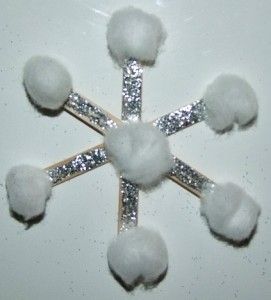
Snowflakes with lollipop sticks.

Snow Globes


https://www.pinterest.com/pin/506725395544563063/


Print

Using natural resources to print snowflakes


Experiment with different textures to create print effects. 

Winter books to respond to:

"Penguin"


"The Snowman"


Wednesday, 19 August 2015

Talking through Drawing

I love this idea! Especially on a day when the energy in the class in high and you want the children to focus again.

http://doodles.typepad.com/thedoodler/leaf-pod-doodles/

Rules-
Only communicate through the drawing.
No planning before- i.e. "we are going to draw ..."


You Will Need-
A piece of paper between each pair
A different colouring pencil in each pair

The children are placed in pairs. A piece of paper is placed between them.

The first child draws a shape. The next  adds another shape to it.

They continue to draw, one at a time- until the page is full.

It is beneficial to discuss the many types of lines before this lesson or as a warm up.
https://www.blendspace.com/lessons/XNz8R4ywMmUXhw/lines

This is a great friendship building lesson as they must work together to create and be in tune with what the other child is trying to create.


Monday, 17 August 2015

What Drawing Materials to Use?

Infants:


Markers and Crayons- These are harder and can stand up to their quicker drawing methods.
Children should be moved to finer point pencils/crayons when they begin to colour neatly and look for them. The larger crayons can be very frustrating to use in smaller areas.

Oil pastels are great to get bright, vibrant colours and are very effective on displays.

There should be a range of paper types and sizes available at this age.

First Class to Fourth:


Soft chalk pastels are suitable to introduce at this stage.

Smudging and blending can be achieved with charcoal. I like to use this on newsprint paper.

Children draw their interests and what they observe at this age.
They use symbols to represent objects ('m' for bird in the sky). It is beneficial to encourage the children to observe what they are drawing at this stage to aid the development of their drawing.

Fourth Class to Sixth:


Drawing skills can be introduced at this stage. (See Previous Post). Children will have been given the opportunity to experiment with different drawing materials and may have preferences.

Other ideas:
Drawing objects one in front of the other.
Objects getting smaller as they are further away.
Objects moving up the page getting smaller as they are further away.

Still Life:
Recognise size difference
Edges of objects
Shadows


Planning for Art

I like to keep my plans simple and straight forward. I plan by theme each month.

Here's how I long term plan for Art:


Saturday, 15 August 2015

Irish Museum of Modern Art & Contemporary Art

Museum visits are something teachers don't often consider for younger years. I brought my first class to The Museum of Modern Art in Dublin last year. They loved it!

www.imma.ie


The school I work in is a DEIS school. There was no charge for our guided tour. I think there may be a fee for non-DEIS schools, €26 comes to mind.

It was such an eye-opening visit. The guides were amazing- the questions- and answers they managed to get from the children...


This piece really got the children talking- were they old or new lightbulbs? Was someone storing them? Or recycling?


The tour included a workshop.

Afterwards the class had their picnic in the lunch room and played out in the maze. I think they remembered this day more than their actual school tour! :D

I picked up this book in MoMA while in New York- it has great ideas for teaching children to respond to contemporary art and reminded me of the tour guide in IMMA.


I even found this book as a great introduction to Contemporary Art for myself. I happened to come across it in my local town library- so it's worth a look! 

I cannot help but notice all the integration opportunities- Science, P.E.


English


SPHE, Science

Check out this painting- made with prints of the artist's eyelashes!