Our union has placed an embargo on SSE paperwork at the moment, but the Department of Education are requesting that SSE forms a part of their summer CPD courses.
Teaching and Learning in Visual Arts:
Three themes:
Learner Outcomes:
Purely curriculum learning outcomes.
Checklists that I have posted could be used- these are purely curriculum objectives.
Learner Experience:
Learner environment, Engagement in learning, Learning to learn.
Using questionnaires will help gather evidence. The PDST website has a great tutorial to create an online survey- http://cmsnew.pdst.ie/SSEResources#Google Forms
Teacher's Practice:
Preparation, Teaching approaches, Management of pupils, and Assessment (http://clairesprimaryschoolart.blogspot.ie/2015/08/assessing-art.html)
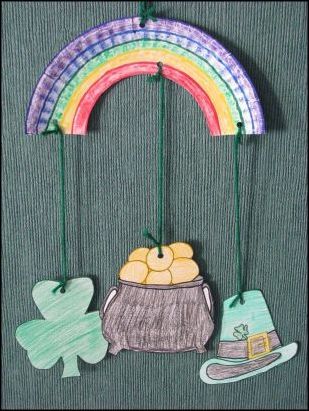
Another time that just needs some product based art! St. Patrick's Day is March 17th, here are some craft ideas I found online that may be of use in your planning!
Some shamrock templates:
A great method to draw shamrocks is to draw three hearts joined in the middle. But as this is very product based, templates are just handy.
I've had a few messages about art based on the 1916 rising (some of you are very organised!!). Here are a few ideas that may come in handy!
This is a great resource: http://www.easter1916.ie/index.php/schools/primary/#
Tea Stained Photographs:
Firstly, the setting-
Examine old photographs. Children are fascinated by these. This link has some details about cameras in history: http://photodoto.com/camera-history-timeline/
Photos took a long time to capture and develop in 1916. Often moving objects are not captured properly because of this.
Photos can be compared before and after the rising, or then and now. There are some photos on the Easter 1916 website mentioned at the top of this post.
The children can work on creating their own old photos. Using tea bags, they stain the paper. Leave to dry and then using pencil draw their 1916 scene. Trace over the pencil drawing in black marker.
Seomra Ranga has a post with some slogans and quotes that may be a good starting point.
http://www.seomraranga.com/2010/07/1916-slogans/
When children are creating posters, remind them about clear writing. If the students are more able, can they tie in the writing with the theme of the poster? What clues will we see in the poster about the rising?
Responding to Poetry:
W.B. Yeats famously wrote "All that changed, changed utterly" (full poem here: http://www.easter1916.net/peom.htm).
http://izquotes.com/quote/279895
There are other poems related to the 1916 rising here: http://www.1916rising.com/pic_poetry.html
The children could read, maybe pick their favourite line/poem. And create a response to it.
This may be using the writing and decorating it, or maybe a more abstract response.
They could explore the colour and shapes that comes to mind as they read it. Is it dark and sharp? What kind of lines can they imagine as a response?
Maybe a creation in clay as an abstract response?
The abstract response can be displayed with the poem, or not.
Construction:
Using a shoe box, the class could work in groups to create the scene of the 1916 rising.
The background can be painted, buildings made from cardboard and attached and figures from clay or plasticine.
I stumbled across this image on http://diarmada.scoilnet.ie/blog/files/2011/05/DSCF2992.jpg- how fantastic is this!
Responding to Art from 1916
This article outlines some of the paintings created during this time. This may be a great talking point for the children to respond to the art created during this era.
Another useful site: http://www.irishtimes.com/culture/heritage/1916-schools
As I have already mentioned, I work with younger years, so am a bit out of touch with some of the senior classes history curriculum. I'm very open to others sharing ideas that they have also! :)